Alternator ripple test oscilloscope UK: AC coupling checklist
An alternator ripple test with an oscilloscope reveals diode or winding issues that scan tools often miss. By viewing AC content on the charging output — typically with AC coupling — technicians can spot uneven or missing pulses while electrical consumers are loaded.
Pico Automotive guided tests describe alternator AC ripple checks and warn that battery-terminal-only measurement can dampen faults. Snap-on UK quick tips frame ripple testing as an early electrical diagnostic step with good versus bad pattern examples. UK PMM Scope School explains AC coupling to isolate ripple while another channel can still show DC charging voltage.
UK workshop cues
Consider ripple testing for electrical gremlins, battery lamp complaints, noisy audio systems tied to charging, or batteries that fail early without a clear parasitic draw. It sits naturally beside starter and charging scope work rather than after guesswork alternator swaps.
AC coupling checklist
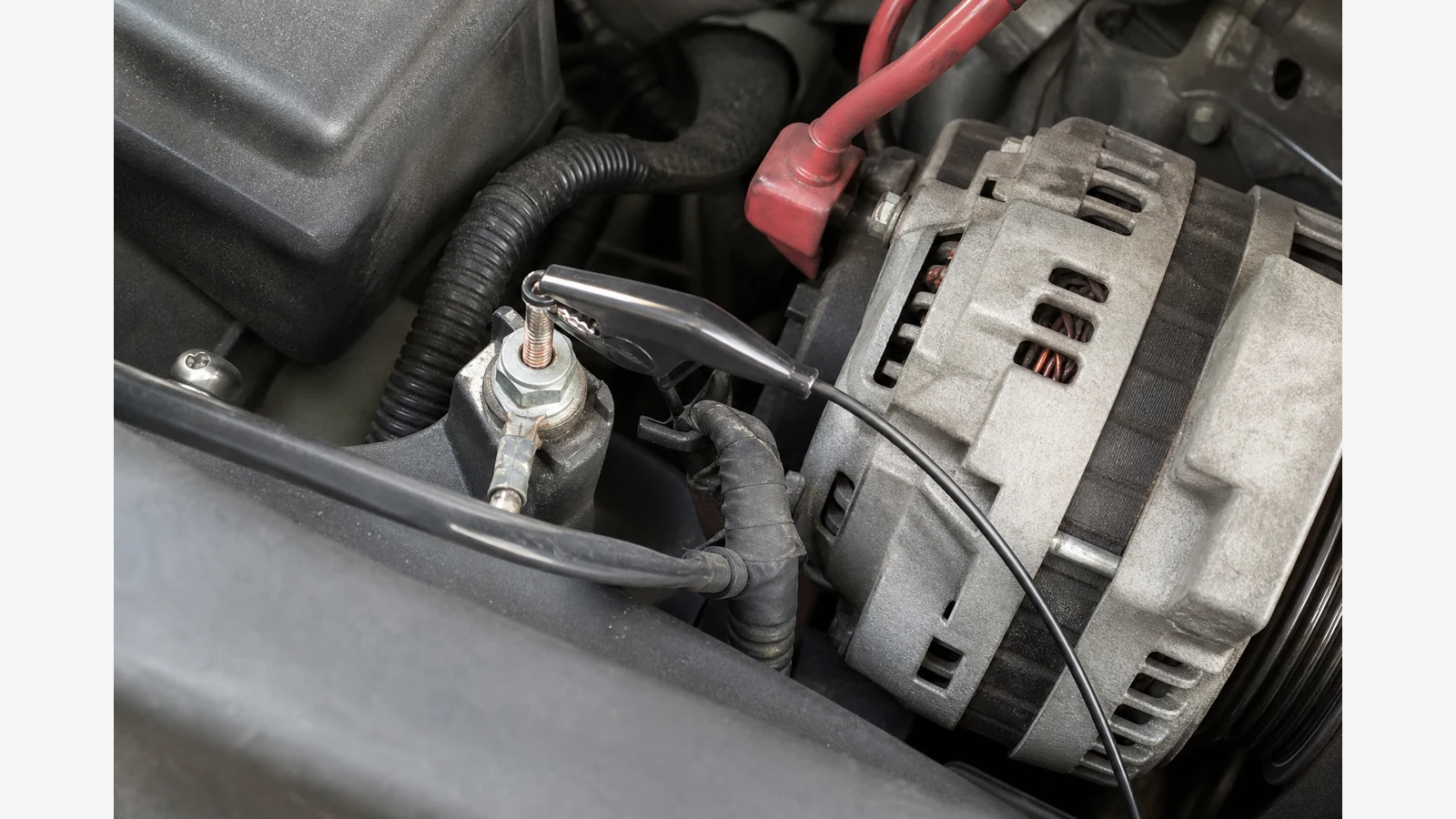
- Prefer the alternator B+ stud when accessible. Measuring closer to the source reduces damping that can hide diode faults at the battery posts.
- Use AC coupling for the ripple view. AC coupling strips the large DC offset so small AC content is visible on a useful volts/division scale.
- Optionally watch DC on a second channel. A multi-channel USB automotive scope can show charging voltage (DC) and ripple (AC) together for context.
- Load electrical consumers. Headlamps, blower, and heated screens raise alternator demand so missing pulses are more obvious.
- Compare even versus missing pulses. Look for regularity of the ripple pattern rather than inventing millivolt pass/fail limits.
Why battery-terminal-only captures can mislead
Cable resistance and the battery’s smoothing effect can reduce visible ripple at the posts. A cleaner capture at the alternator output (when safe and accessible) is preferred in public guided-test practice.
Who should not over-interpret
Hybrids and smart-charging systems need system context; do not treat every ECM-controlled charging strategy as identical to a simple non-ECM alternator. Avoid quoting unsupported diode failure statistics.
FAQ: DC vs AC coupling in plain English
DC coupling shows the whole signal including battery/charging voltage. AC coupling removes that steady offset so you can magnify the small alternating ripple riding on top. Many charging diagnoses use both: DC for “is it charging?”, AC for “is the ripple healthy?”.
Related reading
Continue with relative compression testing, lab scope accessories planning, ignition waveform checks, or the existing automotive oscilloscope UK buyer’s guide.